Sprinkler Trouble: What You Can Fix Yourself and What Needs a Crew
One broken head is usually a five-minute fix. A zone that will not shut off or a dry corner that never gets wet is a different problem entirely.
August 26, 2026 · 4 min read
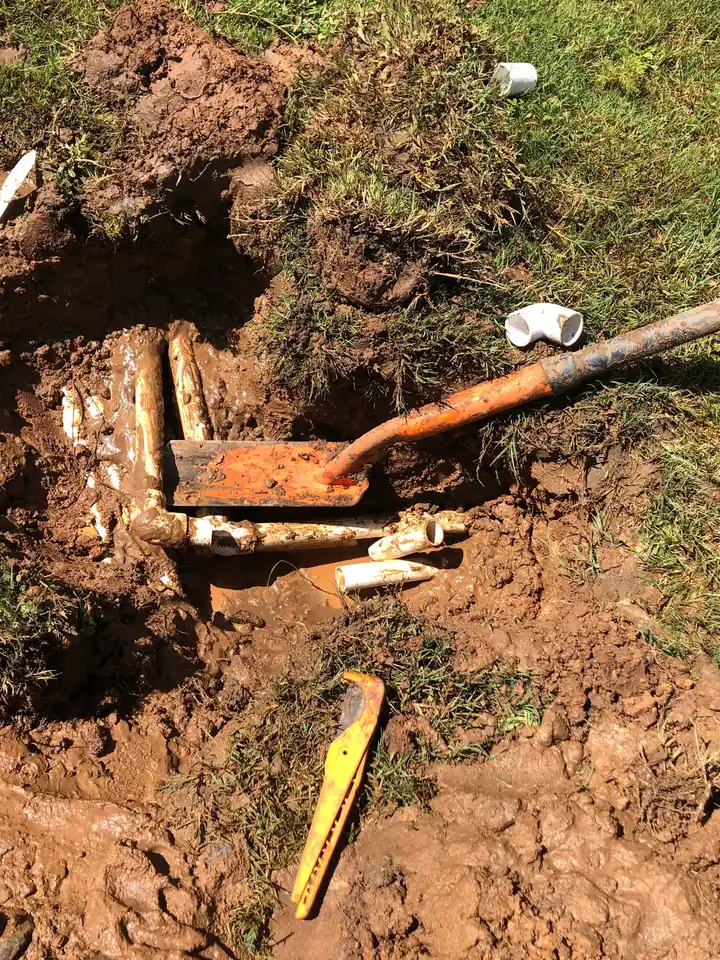
Not every sprinkler problem is the same size. Some are a spare part and ten minutes with a shovel. Others are a valve buried under a foot of Georgia clay, a wiring fault, or a pressure problem that will not go away no matter how many heads get swapped out. Knowing which one you are looking at before you start digging saves a Saturday and, more often, saves you from turning a small problem into a bigger one.
The problems you can usually handle
A single head spraying the driveway, the fence, or the side of the house instead of the lawn is almost always a head problem, not a system problem. Heads get knocked crooked by mowers, trimmers, and foot traffic, and the fix is often just straightening or replacing that one head. A head that is stuck low and barely trickling water while the rest of the zone runs fine usually means debris is jammed in that one head, or the seal has worn out. Both are contained, cheap repairs that do not point to anything wrong with the system underneath.
- One head sprays the wrong direction, usually just knocked out of alignment
- One head barely trickles while neighbors run fine, debris or a worn seal in that head
- A head sinks into the lawn and never pops up, often a broken riser, an easy swap
- Water pools around the base of one head after it shuts off, a bad seal, not a valve issue
The signs that point to something bigger
A whole zone that will not turn on, or will not turn off, is a different animal. That usually means the valve for that zone has failed, or debris is caught in the valve diaphragm, and valves sit underground in a box that most homeowners have never opened. A zone that runs weak across every head, not just one, points to a pressure problem somewhere upstream, which can mean anything from a main line leak to a backflow issue. And a dry corner that never seems to get wet even though the rest of the zone looks fine is often a sign of a slow leak between the valve and that section of pipe, quietly wasting water underground before it ever reaches a head.
Why zone and valve work is not a weekend project
Valves are wired into a controller, tied to a specific zone, and connected to a main line under real pressure. Getting one wrong does not just mean a zone that still does not work, it can mean a flooded yard, a burst line, or a controller that no longer talks to the box correctly. This is exactly the kind of call where a same-day fix matters, because a stuck-open zone can run for hours and waste a genuinely large amount of water before anyone notices, especially overnight.
What a same-day call actually looks like
One Warner Robins customer got home from work, noticed a zone had been running since before they left that morning, and had it fixed within the hour by a crew that showed up after they had already closed for the day. That is the practical difference between a head you can straighten yourself on a Sunday afternoon and a valve issue that needs someone who works on irrigation systems every day. If it is a stuck zone, water pooling somewhere it should not, or a dry patch that will not respond to anything, it is worth a phone call before it turns into a bigger repair.
Why pressure problems are easy to misread
Low pressure across a whole zone gets blamed on the heads more often than it should be. Heads are the visible part of the system, so they are the first thing people suspect, but weak pressure across every head on a zone almost always starts somewhere further back, at the main line, the backflow device, or a partially closed valve upstream. Swapping heads on a low-pressure zone rarely fixes anything, because the heads were never the problem. Tracing pressure loss back to its source takes checking the system in order, from the water source forward, rather than guessing at the end of the line.
Adding heads or extending a zone
Sometimes the fix is not a repair at all, it is coverage that was never there in the first place. A newly planted bed, a section of lawn that got added later, or a corner that has always run a little dry can often be solved by extending an existing zone with additional heads rather than tying in a whole new zone. That only works if the zone has the pressure and flow capacity to support the extra heads without starving the ones already there, which is part of why this kind of change is worth having someone check before heads just get added on.
When in doubt, call before you dig
F.G Landscaping and Irrigation services and repairs sprinkler systems throughout Warner Robins and Houston County, from a single crooked head to a failed valve or a zone extension. If you are not sure which kind of problem you are looking at, that is a normal thing to ask about over the phone. Call (478) 397-0052 and describe what the zone is doing. It is usually obvious pretty quickly whether it is a five-minute fix or something that needs a proper look.
F.G Landscaping & Irrigation, (478) 397-0052
Call (478) 397-0052More articles
Standing Water in a Warner Robins Back Yard: Why the Clay Holds It and What Fixes It
A yard that stays soggy three days after rain usually has a soil problem, not a rain problem, and the fix depends on which way the ground actually falls.
Watering a Warner Robins Lawn Through a Georgia Summer Without Wasting It
Short daily watering trains grass roots to stay near the surface, which is exactly the wrong habit for a Georgia summer.