Bed Edges That Hold: Why Poured Curbing Beats Plastic and Block
Plastic edging heaves out of Georgia clay in a season or two. A poured curb does not move, because it is not sitting on top of the ground, it is part of it.
August 26, 2026 · 3 min read
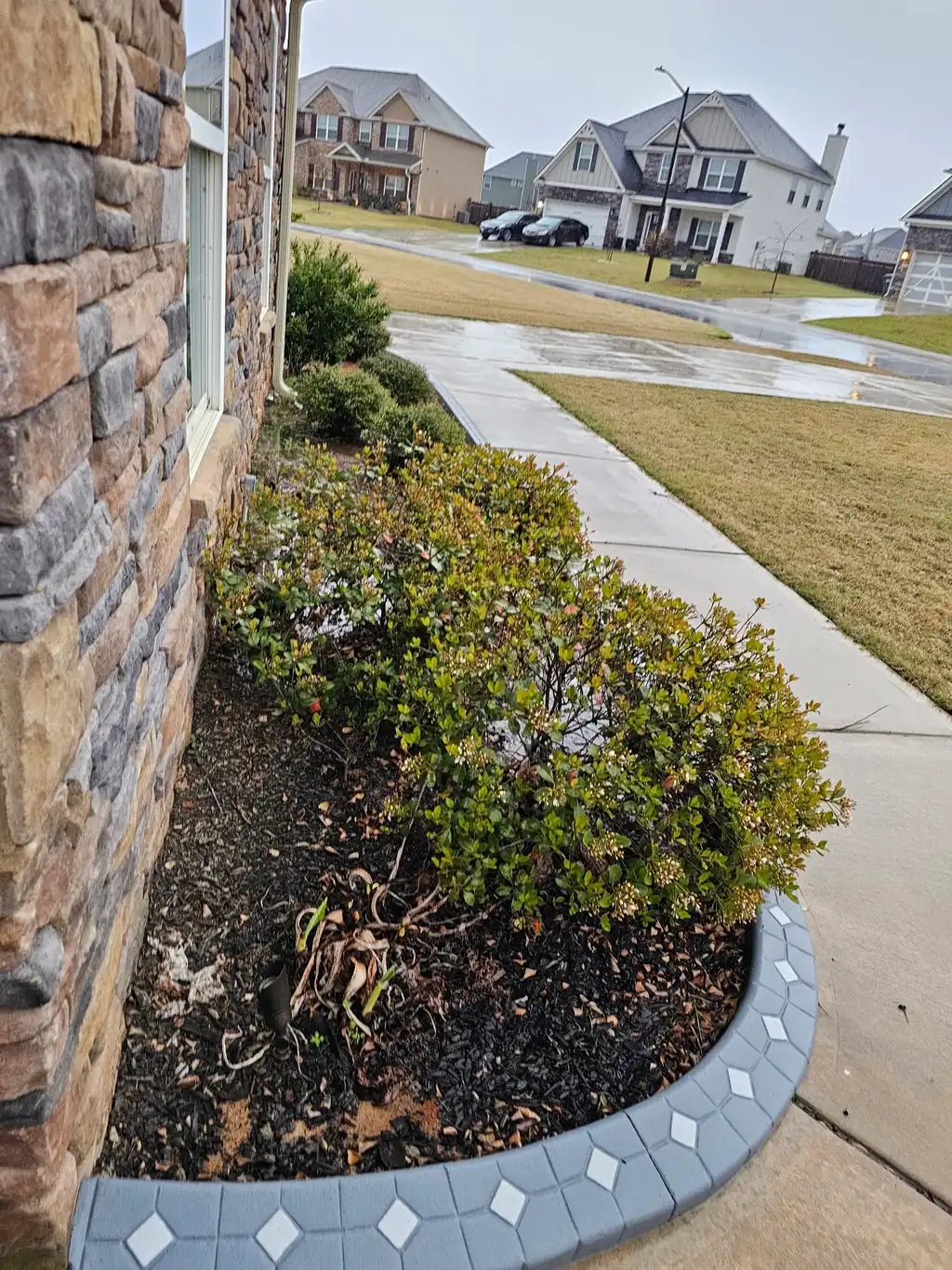
Every bed edge does the same basic job: keep mulch in the bed, keep grass out of it, and give the whole yard a clean line to look at. How that edge is built, though, makes a real difference in how long it stays looking that way. Plastic edging, landscape block, and poured concrete curbing all do the job on day one. They do not all still be doing it two summers later.
Why plastic and block edging drift
Plastic edging is cheap and easy to install, which is exactly why it is everywhere, but it is also thin and lightweight, and Georgia clay does not sit still. Clay expands when it is wet and contracts as it dries, and that constant movement works plastic stakes loose over a season or two, especially through freeze and thaw cycles in winter. Once a section heaves up an inch, mulch starts spilling over it and grass starts creeping under it, and the clean line is gone. Block edging holds up longer because it has weight, but individual blocks still shift with the ground underneath them, and a bumped block throws off the whole curved line unless someone resets it.
What a poured curb does differently
Poured concrete curbing is not sitting on top of the ground the way plastic or block is. It is formed and poured directly into a trench cut along the bed line, so it becomes one continuous piece tied into the soil rather than a series of separate segments resting on it. That is what lets it hold a long, sweeping curve without a single seam or joint to work loose, and it is why it does not heave the way lightweight edging does when the clay underneath shifts with the seasons. A curb like this is also poured to a real depth, which means mowers can run a wheel right along the edge without catching or dragging it out of line.
The look, not just the function
Poured curbing also does something plastic and block cannot: it can carry a finish. A grey base with a white diamond inlay pattern, laid in one continuous sweeping curve, reads as a built feature rather than a strip of hardware bought at a home improvement store. It is a visibly different tier of edging, and it is part of why a bed edged this way still looks intentional and finished years after installation, long after plastic edging from the same era would already be bowing out of the ground.
- Poured as one continuous piece, no stakes and no separate segments to work loose
- Holds long sweeping curves that plastic and block struggle to hold cleanly
- Formed to a real depth, so mower wheels can run the edge without catching it
- Can carry a finish pattern, not just a plain functional strip
What install day actually looks like
The bed line gets marked out first, then a trench is cut along it to the depth the curb needs. Concrete is formed and poured right in the trench, shaped and finished along the curve while it is still workable, then left to cure before mulch and any new planting go in around it. It is not an overnight job, because the concrete needs real time to set before it can be walked on or mulched up against, but the disruption to the rest of the yard is limited to a narrow strip right along the bed edge.
Pairing it with the planting it protects
Curbing tends to get the most attention where it borders a bed that is doing real work: foundation planting along the front of a house, a mulched screen along a fence line, or a commercial bed at the edge of a parking lot where a clean line matters for how the whole property reads from the street. A curb holds that line without shifting, so shrub and grass plantings inside the bed do not slowly creep outward into the lawn or get crowded by grass creeping inward, which is a maintenance headache a curb removes almost entirely once it is set.
Seeing it in your own beds
F.G Landscaping and Irrigation pours this style of decorative curbing on beds around Warner Robins, usually alongside planting and mulch work on the same property. If your bed edges are heaving, spreading, or just never looked as clean as you wanted, call (478) 397-0052 and ask about curbing for your specific beds. It is easier to picture on a walk through the yard than over the phone.
F.G Landscaping & Irrigation, (478) 397-0052
Call (478) 397-0052More articles
Standing Water in a Warner Robins Back Yard: Why the Clay Holds It and What Fixes It
A yard that stays soggy three days after rain usually has a soil problem, not a rain problem, and the fix depends on which way the ground actually falls.
Sprinkler Trouble: What You Can Fix Yourself and What Needs a Crew
One broken head is usually a five-minute fix. A zone that will not shut off or a dry corner that never gets wet is a different problem entirely.