Laying Sod So It Actually Takes: Prep, Seams, and the First Three Weeks
Sod fails less often from bad grass and more often from skipped soil prep or the wrong watering habit in the first three weeks.
August 26, 2026 · 3 min read
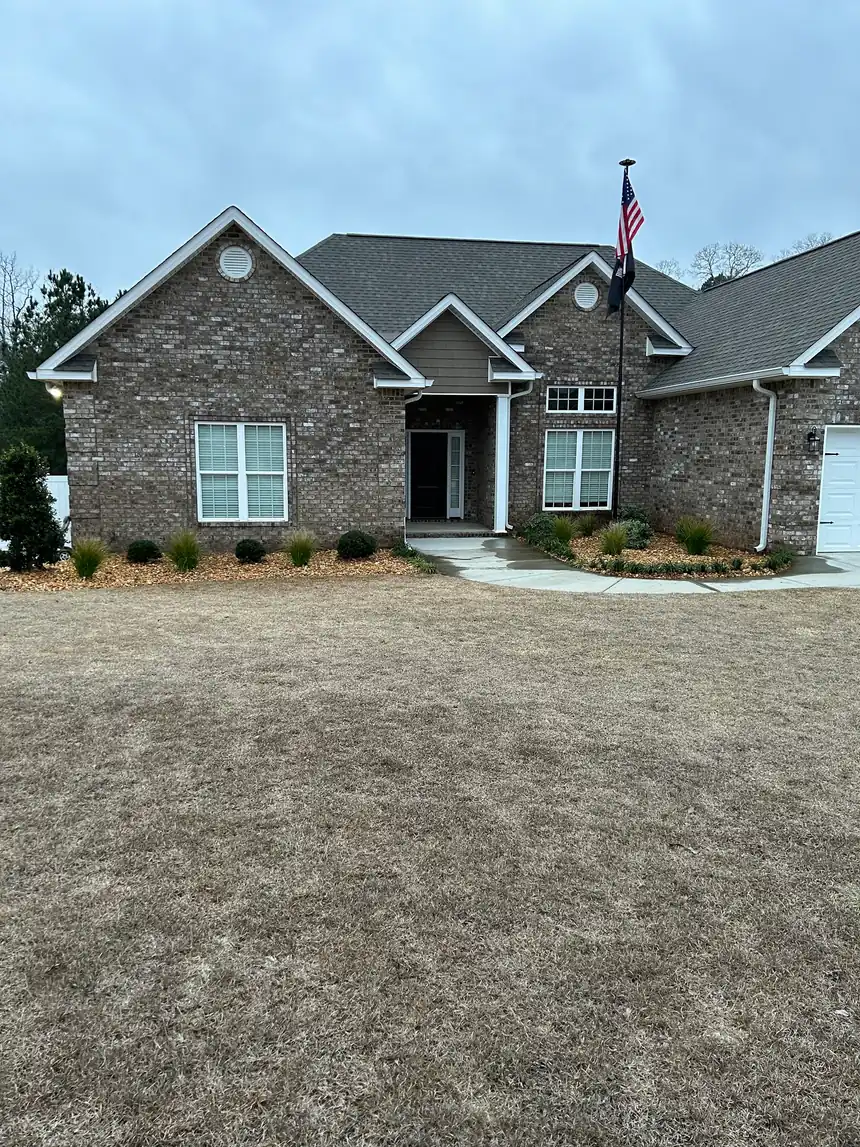
New sod looks finished the day it goes down. Green, even, mowed edges, and a yard that looks like it has been there for years. That first impression can be misleading, because sod is not actually finished the day it is laid. It is finished three to four weeks later, once the roots have knitted down into the soil underneath, and everything that happens in those first weeks decides whether that green stays green.
Prep is most of the job
The soil underneath matters more than most homeowners expect. Georgia red clay compacts easily, especially in a yard that has just been through excavation or grading work, and sod laid straight onto compacted, uneven clay struggles to root even if the grass itself is healthy. Good prep means breaking up the top layer of soil, grading it level so water does not pool under one section of sod while another dries out, and removing debris that would otherwise create air pockets under the roots. Skipping this step is the single most common reason sod that looked fine on day one is patchy by week three.
Why seams matter more than people think
Sod comes in strips, and how those strips are laid against each other affects how the lawn knits together. Seams should be staggered, like bricks in a wall, rather than lined up in a continuous row, because a straight seam line creates a weak point the whole length of the yard. Strips should sit tight against each other without overlapping and without gaps wide enough to dry out and die back before the roots can bridge them. A tight, staggered seam layout is part of why a professionally laid lawn knits into one solid surface instead of staying a visible grid of rectangles for the whole first season.
The first three weeks decide everything
New sod has no root system yet, which means it cannot pull water from deeper soil the way an established lawn can. For the first week or so, that usually means daily watering, enough to keep the sod and the soil underneath it consistently moist, not soggy. Over the following two weeks, watering should gradually stretch out and run longer per session as roots start reaching down, easing the lawn toward the deeper, less frequent schedule an established lawn wants. Watering too little in this window lets the sod dry out and shrink at the seams. Watering too much, especially on already-heavy clay, can drown the roots before they ever get established.
- Week 1: water daily, enough to keep sod consistently moist
- Weeks 2 to 3: stretch watering out, deeper and less frequent as roots establish
- Avoid heavy foot traffic and mowing until the sod resists a gentle tug
- Warm soil helps sod knit faster, which is why Middle Georgia's long growing season is an advantage
Why warm ground works in your favor
One advantage of laying sod in Middle Georgia is soil temperature. Warm soil speeds up root growth, which means sod laid during the warmer months here can knit down faster than the same sod laid in a cooler climate. That does not remove the need for careful watering, but it does mean the window to establishment is often shorter than homeowners expect, as long as the first three weeks are handled correctly.
Watch for edges pulling away, not just brown patches
A brown patch in the middle of a new lawn is easy to spot and usually easy to explain, whether it is a watering gap or a spot that got scalped by a mower too early. Edges curling up or pulling away from a walkway, driveway, or bed line are a subtler sign and often get missed because they look like a minor cosmetic issue rather than a root problem. A curling edge usually means that strip is drying out faster than the rest of the lawn, often because it is catching more sun and less overlap from the sprinkler pattern, and it is worth a closer look with a hand watering pass rather than waiting to see if it fixes itself.
From bare dirt to finished lawn
F.G Landscaping and Irrigation lays sod by the pallet across Warner Robins and Houston County, and the work does not stop at delivery. Ground gets prepped and graded first, strips get laid tight and staggered, and the goal is a yard that does not need reseeding afterward. If a section of your lawn is bare dirt right now or an old lawn needs replacing outright, call (478) 397-0052 to talk through what the ground actually needs before anything gets laid down.
F.G Landscaping & Irrigation, (478) 397-0052
Call (478) 397-0052More articles
Standing Water in a Warner Robins Back Yard: Why the Clay Holds It and What Fixes It
A yard that stays soggy three days after rain usually has a soil problem, not a rain problem, and the fix depends on which way the ground actually falls.
Sprinkler Trouble: What You Can Fix Yourself and What Needs a Crew
One broken head is usually a five-minute fix. A zone that will not shut off or a dry corner that never gets wet is a different problem entirely.